A holiday gift set is judged twice: once when it is handed over, and again weeks later when the chocolate is gone and the mug or towel is still in use. This guide covers what these coordinated sets contain, how treat-led, drinkware-led and textile-led combinations differ, which presentation formats suit which handover, and what to settle before asking a supplier to quote.
What a Holiday Gift Set Actually Contains
A gift set in this category is not a single product dressed up for Christmas. It is several small items assembled and finished so it can be handed over as it stands: typically one or two things the recipient keeps, such as a textile or a piece of drinkware, paired with something consumable or decorative, such as festive snacks and chocolates, a mulled wine spice kit, or a small tea and cutlery set. The composition, not the individual item, is what the buyer is choosing.
Small keepsakes sit alongside the usable and edible pieces in some sets: plush keychains, miniature lanterns, Santa or snowman figures and bells. Where a box carries several components, custom inserts and separate compartments hold them in place so the arrangement stays orderly when the lid comes off, a detail that matters when the gift is opened in front of a client or a team.
Treat-Led, Drinkware-Led or Textile-Led
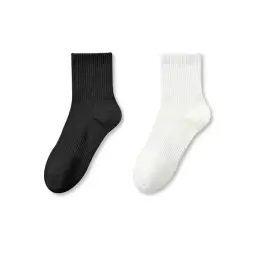
Because food, drinkware and textile content changes from set to set, the most useful first decision is which of them should lead. A treat-led set puts festive snacks or chocolate at the centre and suits a gesture that is shared and short-lived. A drinkware-led set leads with a mug, tumbler or bottle that moves onto a desk and stays there. A textile-led set leads with a towel, socks, mittens or a scarf that gets used through the winter.
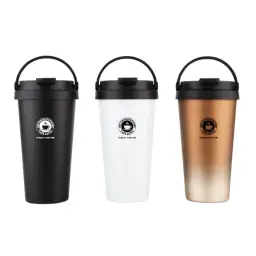
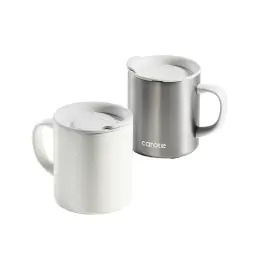
The visible drinkware hero in several sets is a ceramic mug, often with an apple motif or a ribbed surface, while tumblers, thermoses and bottles appear in different body materials, including plastic, glass and metal, with wooden lids on some. Textiles are folded or rolled for presentation: plaid, knitted or printed towels, socks, mittens and scarves. Where the vessel should carry the programme identity, drinkware gift sets give that idea more room; where the warmth of a hot drink is the point, coffee gift sets follow the same instinct with a ritual-led framing.
Presentation Formats and How the Gift Arrives
Rigid lid-and-base boxes are the most common presentation and appear in cylindrical, oval, two-tier round and rectangular shapes. Decorative ribbons finish them, and the holiday pattern is often carried across box, bag and contents, argyle or plaid for example, so the gift reads as one object rather than a bag of loose items.
Other formats change the handover. Fabric gift bags in plain, knitted or felt finishes, and paper gift bags, suit a quick and tidy pass-out; a woven fabric basket, a metal basket with a wooden handle or a suitcase-style hinged box turns the container into part of the gift. Windowed boxes, paper sleeves and clear spheres keep the contents part-visible before opening, which helps on a display table or when the recipient should see the treat inside. Bag gift sets cover much of that soft, carry-friendly end of the range.
Matching the Set to the Occasion and the Recipient Tier
Every set in this category is tagged to the Christmas holiday, and several are positioned for year-end and New Year gifting. Within that, one set can serve more than one programme: employee appreciation, client gifts, or event giveaways and party favours. A compact snack-and-keepsake set handed out at an office party and a rigid-boxed mug-and-textile set left on a client desk are both Christmas gifts, but they are doing different work.
Some sets are framed more narrowly for onboarding, welcome or year-end gratitude rather than broad distribution, which shifts who the recipient is: a new joiner receiving a warm-drink set in December reads it differently from a client receiving the same box. Employee onboarding kits are worth keeping in view when a holiday programme doubles as a welcome gesture, and teams that recognise people across the year often pair Christmas gifting with company anniversary gifts so the two moments feel like one system rather than separate purchases.
Colour, Motif and Keeping a Programme Coherent
Red leads almost every set in this range, with green and white as secondary accents and occasional gold or beige details. That consistency is useful: contents, box and bag are coordinated to share one holiday colour and motif scheme rather than mixing themes, and ribbons and matched patterns reinforce it.
For a buyer distributing across several recipient tiers, that coherence is what holds a programme together. A deeper multi-item set for senior clients and a lighter two-item set for a wider team still look like one campaign when they come out of the same palette and motif family, and a logo or message applied to the box sits inside the scheme rather than fighting it.
Ordering, Branding and What to Settle Before Enquiring
Minimum order quantity for these gift sets is typically 50 sets, though it can shift with the combination of items, the box format and any decoration. Unit prices are tiered by volume, so the per-set price eases as an order climbs from under 100 units to 1000 and above, and across the range prices run roughly from USD 6 to USD 29 per set: the simplest two-item sets sit at the low end, while multi-item sets in rigid boxes sit higher. Treat those figures as the shape of the range, not a fixed rule for every design.
A company logo or message can be carried on the gift box or on a mug in some sets; print method and placement are not fixed across the category, so settle artwork, position and colour constraints early. Some sets also include a greeting or gift card, which lets a written message travel inside the presentation. Bring the occasion, recipient count, target palette, branding decision and card requirement into one conversation: as a China-based supplier, CARDSILK coordinates components, packaging and customization steps so a holiday programme arrives assembled rather than as a pile of separate items.