
Corporate Gift Supplier vs Gifting Company: Which One Fits Your Project
Understand the real difference between a factory-direct corporate gift supplier and a corporate gifting company — how cost structure, customization capability, supply chain control, and project fit differ between the two models.
 By Chen | corporate gifting companies
A few months ago, we turned down an order. An executive assistant at a Canadian company needed 200 gift sets for an anniversary celebration three weeks away. She had spoken to local corporate gifting companies first and found the pricing high and the customization options limited. She wanted to know if going factory-direct could get her better products at a better price.
We told her no. Not because the project was too small — 200 sets is a routine order. Not because we could not make the products — we could. We said no because three weeks, once you subtract production time, leaves a shipping window so narrow that any disruption — a customs hold, a flight delay, a carrier backlog — turns the project into a failure. The gifts would arrive. The question was whether they would arrive before the event or after it. For a time-critical project with zero buffer, that uncertainty is unacceptable. We recommended she find a local gifting company. She would pay more and have fewer choices, but the gifts would be there on time.
That decision captures the real difference between a corporate gifting company and a factory-direct corporate gift supplier. One is built for speed and convenience. The other is built for cost, quality, and customization depth. Understanding which one your project needs is the difference between a successful program and an expensive lesson.
Two Different Machines
A corporate gifting company is typically a domestic service provider. They aggregate products from their supplier base, apply branding through standard decoration methods, and manage local delivery. Their value proposition is straightforward: you brief them, they handle the rest, and everything happens within the same country's shipping infrastructure. The trade-off is equally straightforward: customization is generally limited to logo placement on existing products, the product range is whatever their suppliers carry, and their pricing includes a management margin on top of product cost.
A factory-direct corporate gift supplier operates from the manufacturing side. Most consumer goods — and nearly all corporate gift products — are produced in manufacturing clusters around Guangzhou, Ningbo, and Yiwu in China. A factory-direct supplier with an established partner network has access to a product range that spans electronics, textiles, ceramics, stationery, leather goods, drinkware, and packaging materials. They can present multiple quality and pricing options for the same product category because they work with different factories at different tiers. And because they own production equipment — hot stamping presses, laser engravers, box-making machinery — they can customize at the material and structural level rather than only decorating finished goods.
The cost structure follows from the model. A factory-direct supplier quotes materials, labor, process complexity, and logistics. A gifting company quotes the same stack plus their coordination margin. Neither model is dishonest about this. The question is whether the margin buys you something your project genuinely needs.
Where Each Model Wins
Choose a local gifting company when speed is the overriding requirement.
If your event is less than four weeks away and requires any level of production or customization, the local model is almost certainly the right call. The premium you pay on product cost is the price of a reliable delivery timeline. This is also true for small, recurring programs — monthly employee recognition gifts, for example — where simplicity and consistency matter more than unit cost optimization.
Choose a factory-direct supplier when you have time to use the supply chain advantage.
With four or more weeks of lead time, international shipping becomes viable. Air freight takes roughly three to four weeks from production start to door. Sea freight takes one to two months but costs a fraction of air. The longer your timeline, the more the factory-direct cost advantage compounds.
What "customization" means at each level
The word gets thrown around loosely. Here is what it looks like in practice.
A local gifting company assembles. They take finished products — a notebook, a mug, a tote bag — and fill a box with raffia paper, foam, or at the higher end, an EVA insert. A logo gets added through screen printing or digital print. The product itself does not change. The material, the dimensions, the color — these are fixed. You are decorating what already exists, and packaging it nicely.
A factory-direct supplier builds. They start from raw materials and produce to specification. But the gap runs deeper than product construction. Consider something as specific as a logo: what a local company executes with one or two methods, a factory handles with a dozen. Hot stamping in gold, silver, or holographic foil. Embossing that raises the design above the surface, debossing that presses it in. Silk screen printing for vivid color on fabric or paper. Laser etching on a metal nameplate that catches the light. 3D subsurface laser engraving inside crystal — where the design floats inside the glass, untouched on the surface. These are not incremental upgrades. They are capabilities that do not exist in the local model.
The same gap appears in the finished product itself. A gifting company assembling a set puts branded items into a stock box. A factory-direct supplier produces the box to the exact dimensions of what goes inside, with an insert tray cut to hold each piece, wrapped in a fabric chosen to match a specific Pantone, and decorated with a process chosen for how it reads on that exact material. Nothing is pulled from inventory. Every component is produced for this project.
The trade-off is time. Building from raw materials takes longer than decorating finished goods. But when the unboxing experience carries brand weight — and for client gifts, executive gifts, and high-value programs, it often does — the difference is visible the moment the recipient opens the box.
Here are three examples of customization depth that a local gifting company simply cannot replicate:
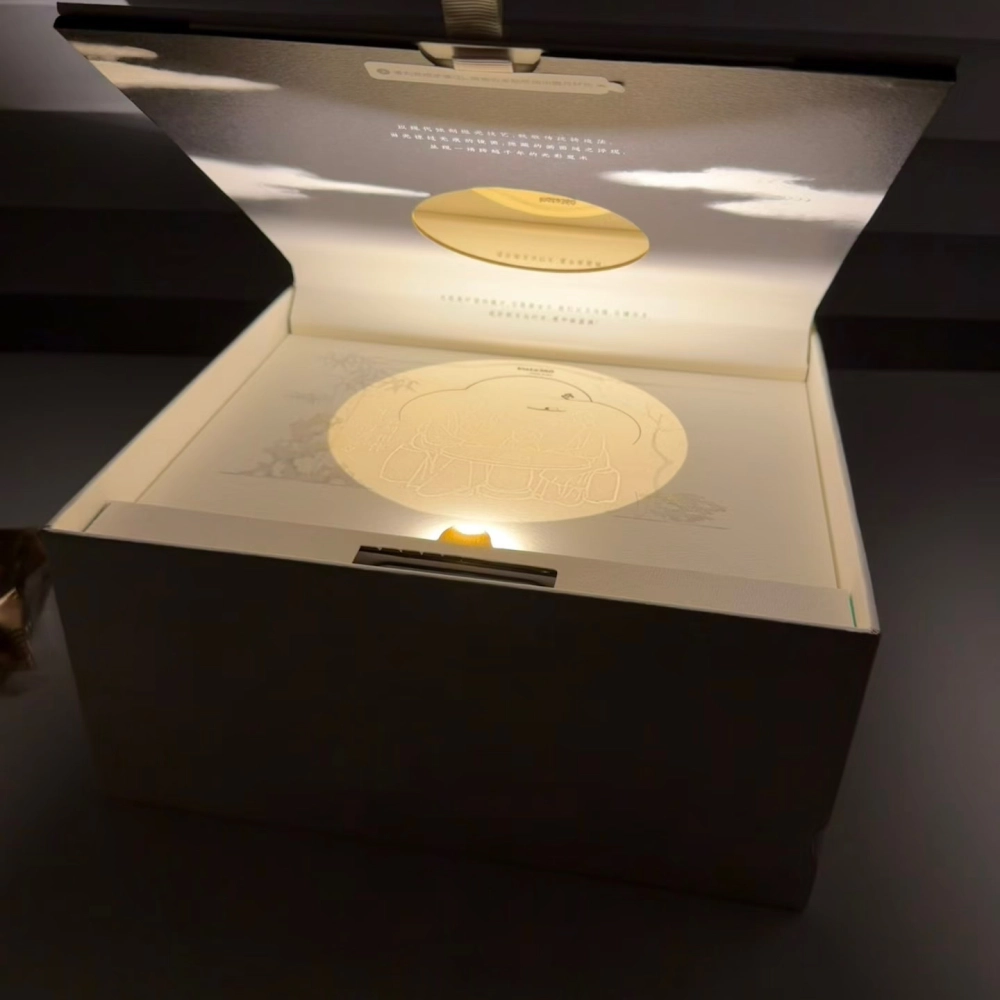
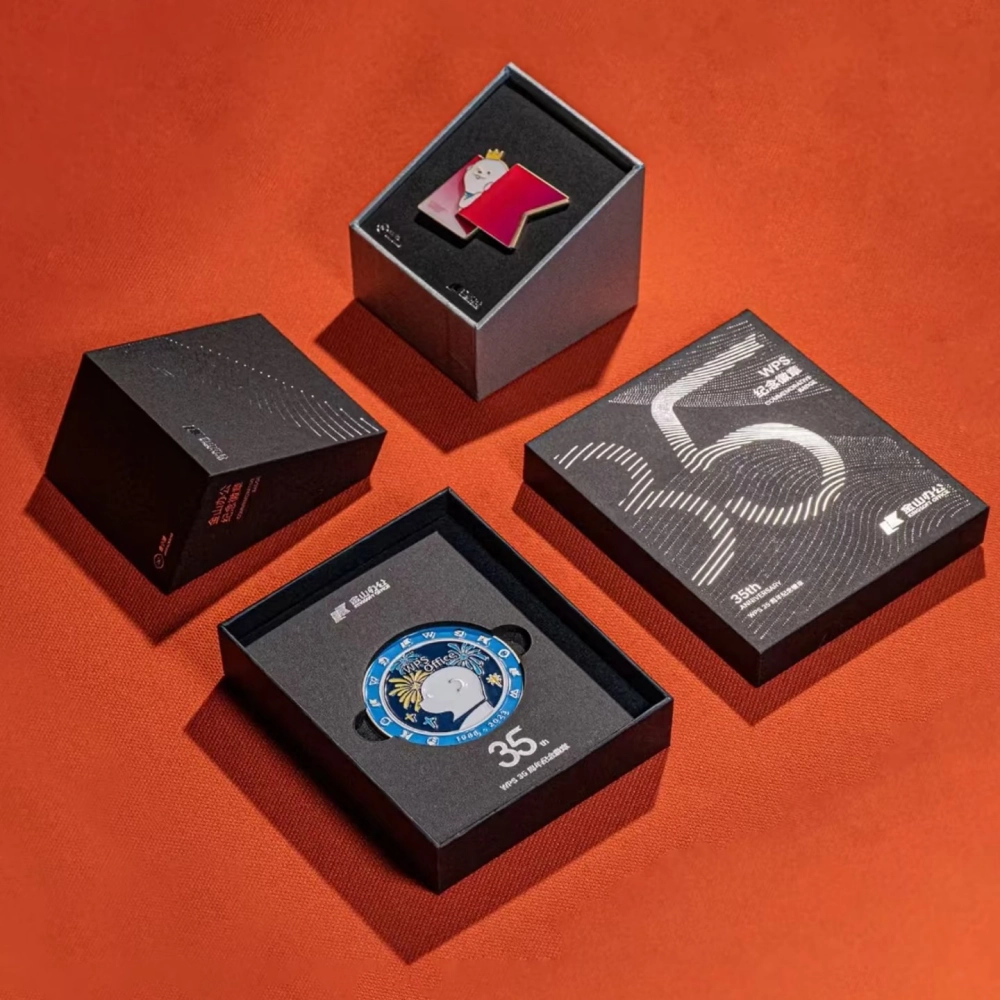
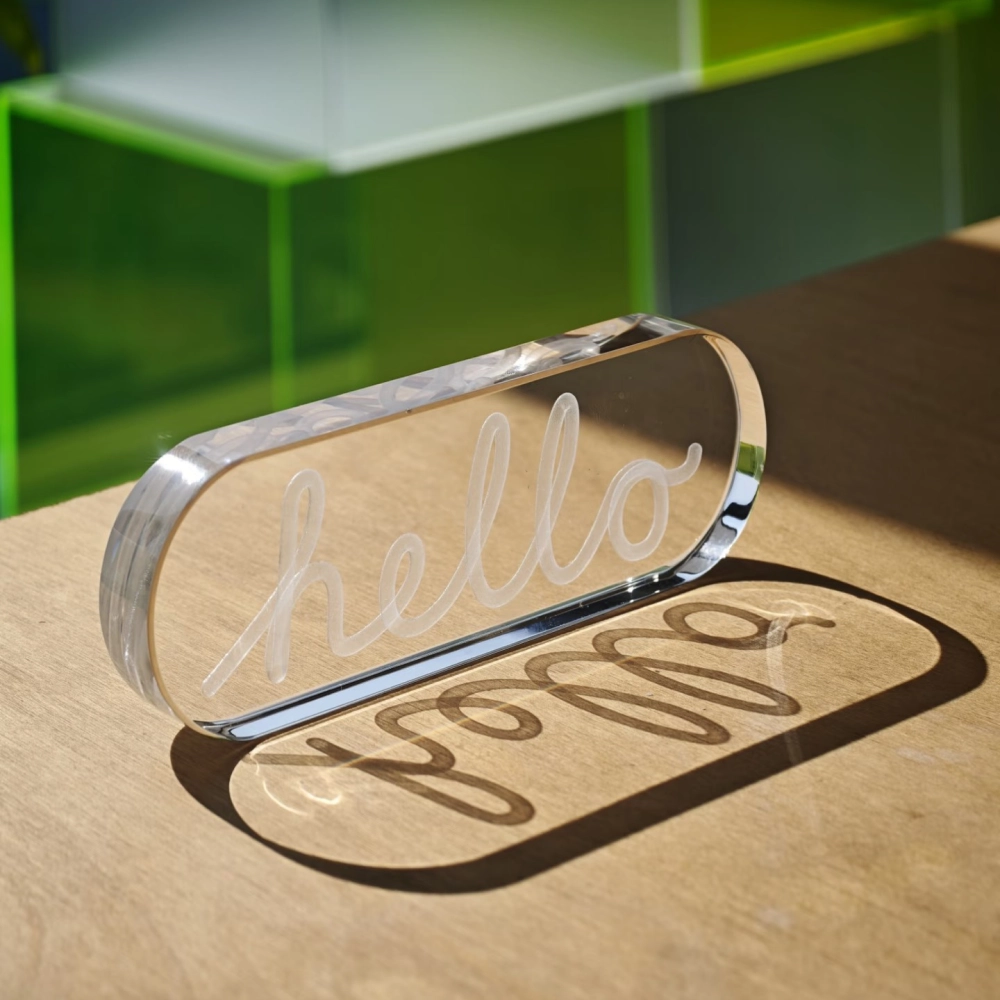
A gift box with an integrated LED strip that illuminates the contents when the lid opens. A set of custom enamel-filled metal badges — a centuries-old craft technique applied to corporate branding. A crystal award with a company logo etched in three dimensions inside the glass, produced on a laser machine that a local print shop does not own. None of these are theoretical. All three were manufactured by a factory-direct supplier for actual client projects. If your project calls for this level of customization, the local model is simply not built for it.
And sometimes the answer is: both.
A long-term partner of ours in Dubai uses a procurement strategy that deliberately mixes both channels. Urgent, small orders go to local suppliers. Speed wins, and the premium is acceptable for the few rush projects each year. Everything else — all non-urgent orders, all large-volume projects — goes through the factory-direct channel. Multiple orders are consolidated and shipped as a single container to their freight forwarder in China, then transported to Dubai in one consolidated shipment. The per-unit shipping cost becomes marginal. On top of this, they periodically order bulk quantities of their most popular products to keep local buffer stock, which lets them fulfill future rush requests without paying local supplier premiums.
None of this requires choosing one model forever. It requires understanding what each model is built to do and routing each project accordingly.
At a Glance
| Corporate Gifting Company | Factory-Direct Supplier | |
|---|---|---|
| Location | Domestic, local fulfillment | Based in China, global shipping |
| Speed | Days to 1-2 weeks | 3-4 weeks by air, 1-2 months by sea |
| Pricing | Product cost + management margin | Materials, labor, process, and logistics |
| Customization | Logo decoration on existing products | Materials, structure, finish, and packaging from scratch |
| Product range | What local suppliers stock | Full market range via partner factory network |
| Quality options | Single supplier tier | Multiple factory tiers at different price points |
| Supply chain visibility | What the supplier shares | Direct line of sight into production |
| Best for | Rush orders, simple branding, recurring small programs | Custom gift sets, mid-to-large volume, projects with sufficient lead time |
If the comparison above points toward a factory-direct supplier for your project, the next step is understanding how the sourcing process actually works — finding the right manufacturer, navigating MOQ structures, managing logistics, and avoiding common first-order mistakes.
Sourcing Corporate Gifts from China: A Factory-Direct Buyer's GuideHow to find real manufacturers in China — not middlemen — for corporate gifts. Covers factory vs trading company vs platform, MOQ, pricing, logistics, and first-order mistakes.→The guide above covers the practical side of factory-direct sourcing. With that context in hand, the three questions below will help you confirm your choice against the specific constraints of your project.
The Decision in Three Questions
If you are choosing between a gifting company and a factory-direct supplier, three questions will point you to the right answer.
How much time do you have? Less than four weeks: local gifting company, almost certainly. Four to eight weeks: factory-direct with air freight becomes viable. Eight weeks or more: factory-direct with sea freight gives you the best cost structure.
How much customization do you need? Logo on a mug: either model works. A custom rigid box with hot-stamped logo, fabric wrapping, and a magnetic closure, filled with products manufactured to your specification: factory-direct is the only model that controls that entire chain.
How does this project fit into your broader procurement? If this is a one-off order with no follow-up planned, the convenience of a local gifting company may outweigh the cost savings of going factory-direct. If you anticipate repeat orders — quarterly client gifts, annual employee appreciation, multiple events per year — a direct supplier relationship accumulates value over time. Institutional knowledge builds. Future orders move faster and cost less.
The goal is not to pick a side in some abstract debate about which model is better. The goal is to route each project to the channel that matches its requirements. Sometimes that means paying a premium for speed and simplicity. Sometimes that means investing a few extra weeks of lead time for better products at lower cost. The companies that do this best are not loyal to one model. They are loyal to the right outcome for each project.
Discuss Your Project With a Factory-Direct Supplier